Seasonalcustoms,foodanddrink

Seasonal customs, food and drink

Spring

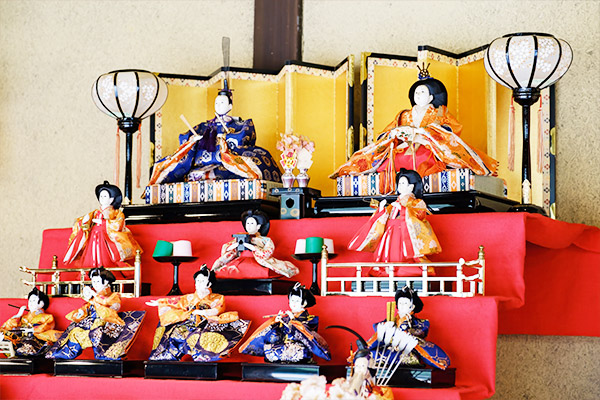
Girls' Day or Doll's Festival

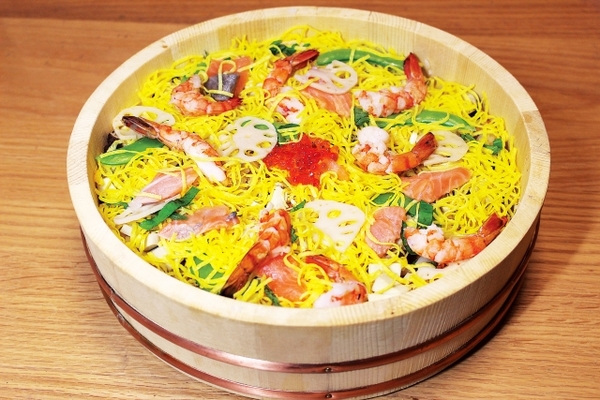
Hinamatsuri is an annual event that celebrates the happiness and healthy growth of girls.
Originally, it originated from a purification ritual performed by people of all ages and genders.
In the past, people would purify themselves in rivers or seas and then float "dolls" made of paper or straw on the water as their substitutes.
By entrusting the dolls with the misfortunes that might befall them, they prayed for their safety.
Over time, the practice evolved from floating the dolls in rivers to decorating them, and now it is cherished as a vibrant and festive occasion.​

Cherry Blossom Viewing

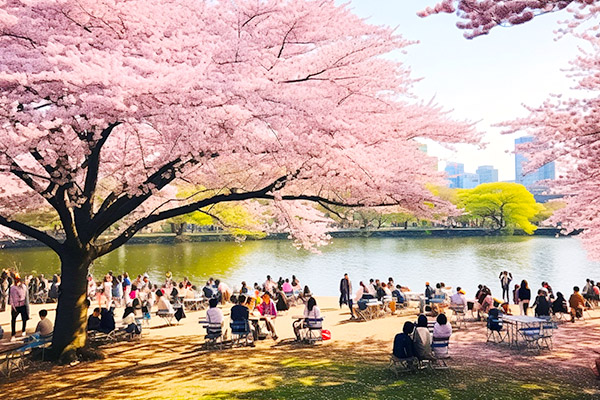
Hanami is a tradition of entertaining the "Deity of the Rice Fields," who protects rice cultivation and brings bountiful harvests.
The blooming of cherry blossoms is seen as a sign that the deity has descended from the mountains to the villages.
In the past, people prepared offerings of sake and feasts for the deity.
Today in Japan, hanami is enjoyed as an event to deepen camaraderie among colleagues and friends.

Boys' Day or Children's Day

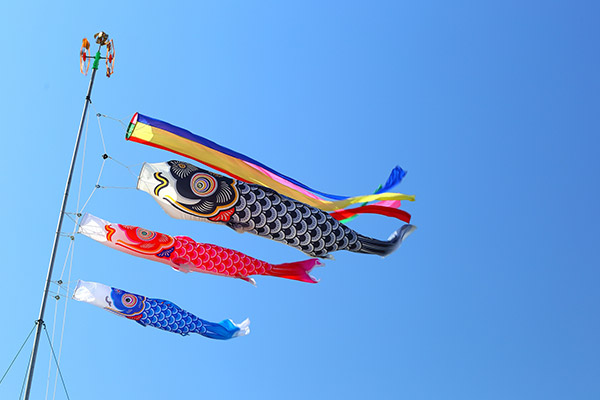
Tango no Sekku is an annual event wishing for the health and growth of boys.
On this day, there is a custom of soaking in "shobu-yu," or iris bath.
Shobu, an iris-like purple flower, involves placing its leaves in the bathtub.
The refreshing fragrance is believed to ward off evil spirits and demons.
The leaves of the iris are known for their fatigue recovery and blood circulation promotion effects, making them ideal for relieving tiredness and stress.

Summer

Obon Festival

Obon is a four-day period dedicated to honoring one's ancestors.
It is believed that the spirits of ancestors return to their homes, so people prepare vegetarian dishes to entertain them.
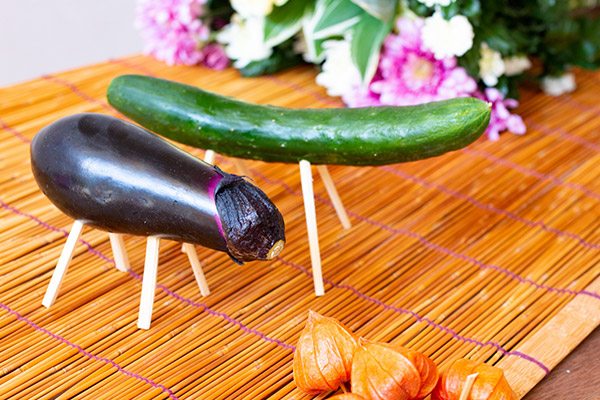
Eggplants and cucumbers are fashioned with chopstick legs to resemble creatures, serving as vehicles for the spirits.
The "eggplant cow" is meant to wish for the ancestors' spirits to return to the afterlife slowly, like a cow, while the "cucumber horse" embodies the hope that they will come back swiftly and stylishly, like a horse, from the afterlife.​

Tanabata/Star Festival

Tanabata is on July 7th.
On this day, there is a romantic folktale about Hikoboshi and Orihime, lovers separated by the Milky Way, who are allowed to meet just once a year.
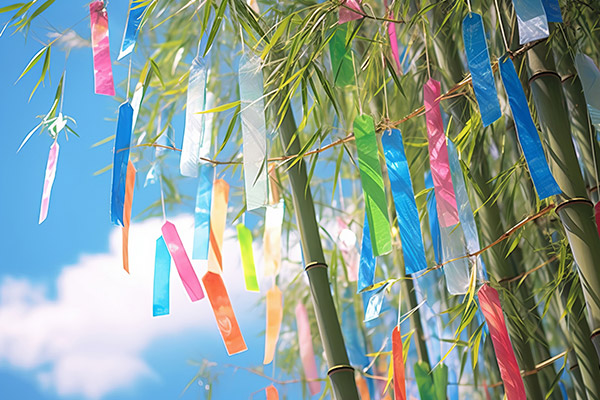
Additionally, there is a custom of writing wishes on strips of paper called tanzaku and hanging them on bamboo leaves.
In Japan, evergreen trees are believed to be inhabited by deities, and bamboo is one of them.
It's believed that the deities dwelling in the bamboo will grant these wishes, leading people to decorate with tanzaku annually.

Fireworks Festival

The beauty of Japanese fireworks is exceptional.
The way they bloom beautifully and scatter quickly is truly an art form of fire flowers.
Fireworks festivals began around 300 years ago.
They originated when the shogun at the time launched fireworks over Tokyo's Sumida River to pray for the dispersal of an epidemic.
Today, fireworks festivals can be enjoyed all over Japan, celebrating this long-standing tradition.

Autumn

Harvest Moon Festival

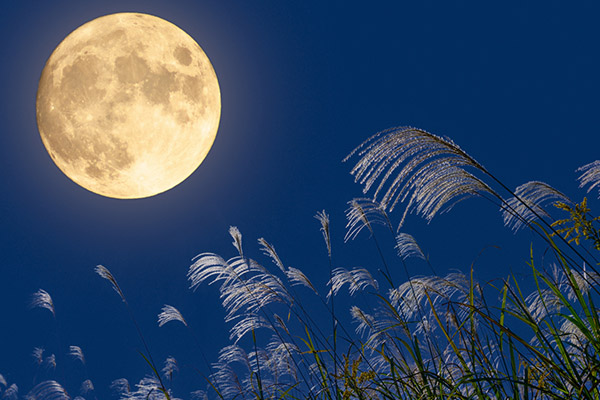
On the night of the 15th day of the 8th lunar month, people make offerings to the full moon and admire its beauty.
In the Kanto region, round dumplings representing the full moon are offered and eaten, while in the Kansai region, long, slender dumplings symbolizing the harvested taro are enjoyed.
Additionally, susuki (Japanese pampas grass) is believed to possess powers of warding off evil and is offered alongside these treats.​

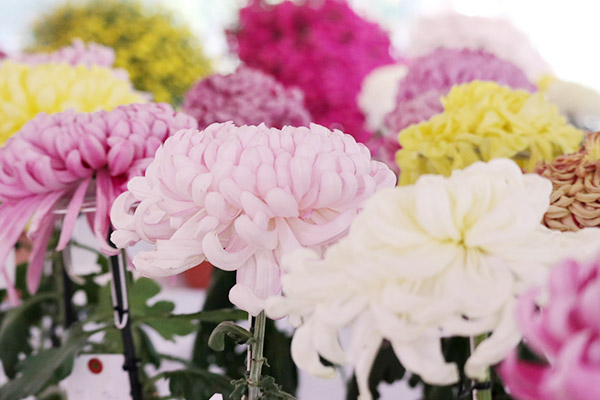
Chrysanthemum Festival

September 9th is the Chrysanthemum Festival.
It's an annual event wishing for longevity.
The chrysanthemum flower, long believed to be an elixir for a long life, is the focus of these wishes.
Kikuzake, sake sprinkled with edible chrysanthemum flowers, is savored for its rich flavor.
The chrysanthemum's aroma, thought to dispel evil spirits, is also said to have a high relaxing effect.

Ohigan
(Buddhist observance of the equinox)

Ohigan is a time to remember the deceased and nourish both body and soul with special foods.
As Ohigan passes, daylight hours gradually shorten, transitioning from summer to autumn.
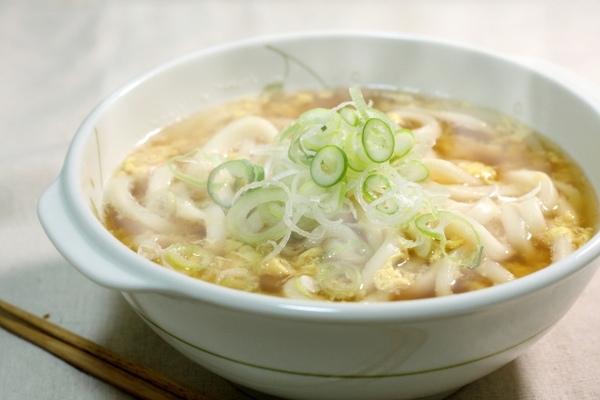
To prevent ill health during this change of seasons, people eat ceremonial foods like udon and soba.
Additionally, "ohagi," a type of Japanese confectionery, is also offered during this period.

Winter

New year's day

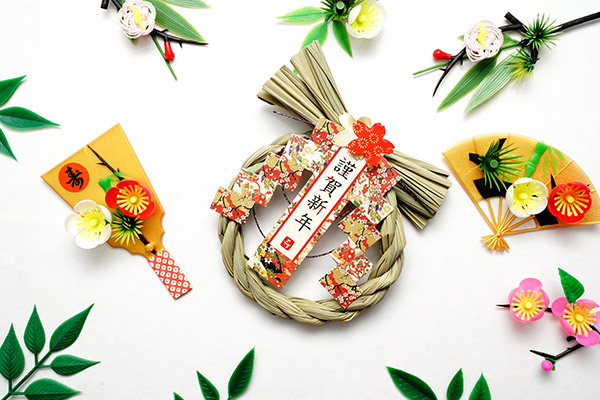
The New Year, or Oshogatsu, is highly cherished in Japan as the beginning of the year.
It is believed that the deity of the New Year, Toshigami-sama, visits each home, bringing the new year with them.
As a signpost for these deities, New Year's decorations are placed at the entrance and gate.
Moreover, an array of "osechi-ryori," derived from dishes offered to the gods, is prepared.
This colorful feast is entirely made up of auspicious and celebratory foods.​

Setsubun / Bean-Throwing Festival

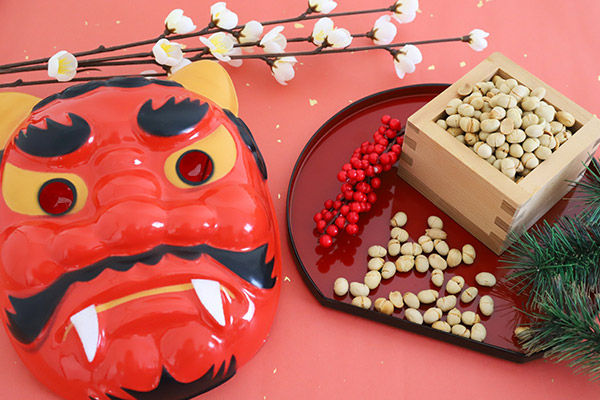
Setsubun, the day before the beginning of spring (around February 3rd), is when people throw soybeans to drive away demons that are believed to visit on the night of Setsubun.
As they throw the beans, they shout, "Demons out, luck in!" Afterwards, it is customary to eat the same number of soybeans as one's age to pray for good health throughout the year.

Winter Solstice

The winter solstice is the longest night of the year.
To dispel evil spirits and purify the body, people take baths with yuzu, a citrus fruit, floating in the water on the night of the winter solstice.
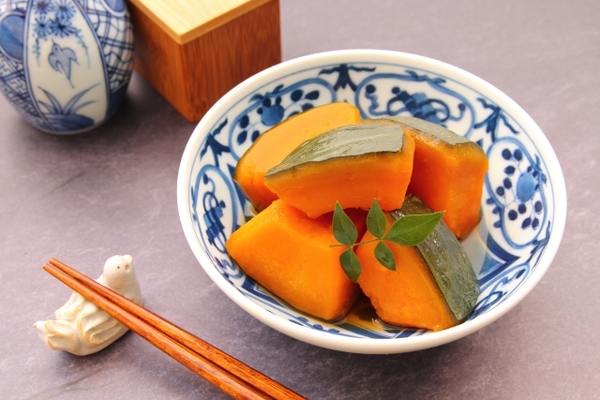
Additionally, eating pumpkin is a way to celebrate the return of the sun, symbolizing hope and renewal.